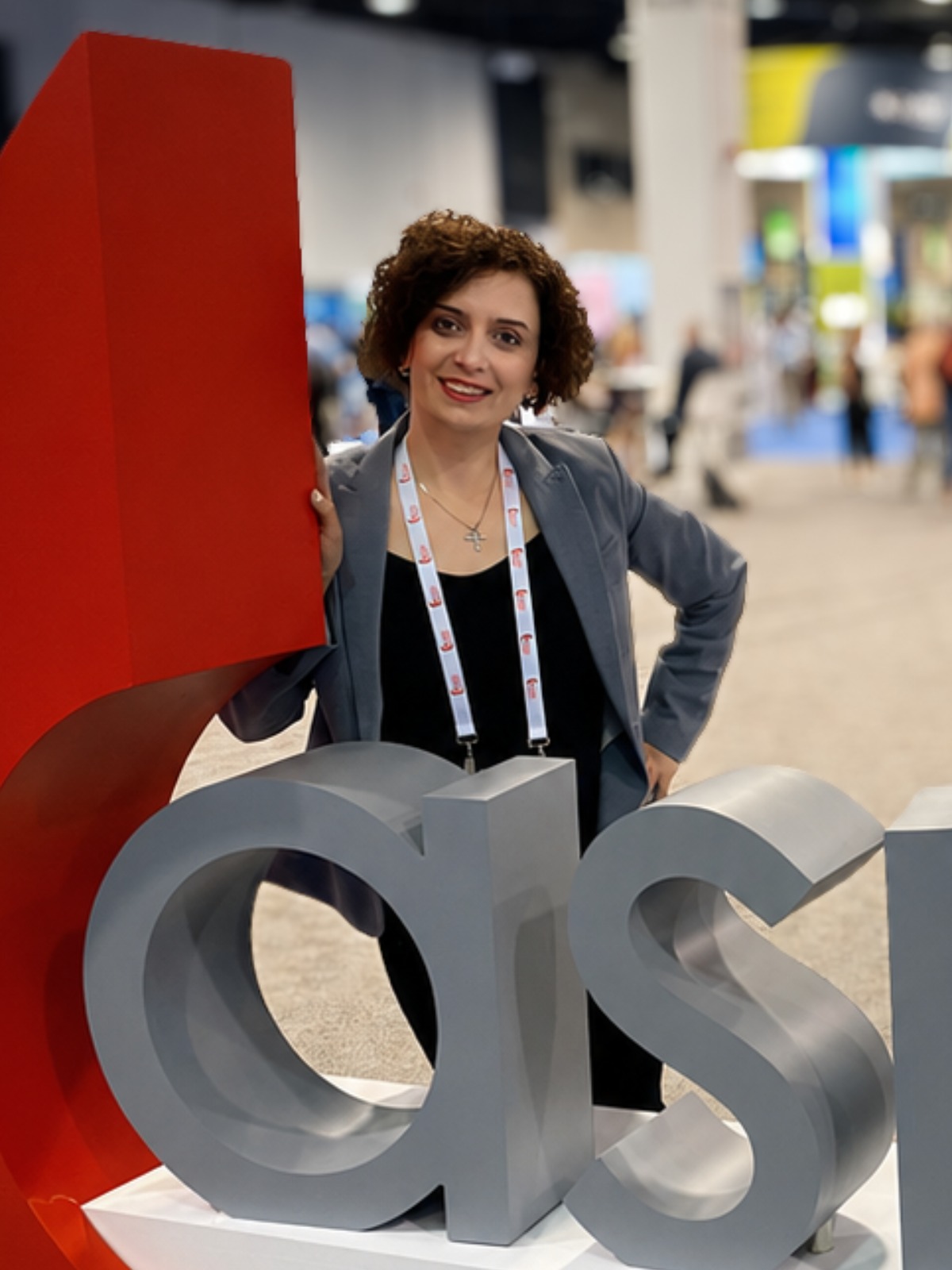
Dr. Elham Neisani Samani is a physician-scientist, OB/GYN, and internationally recognized women's health advocate whose career has taken her from Tehran to rural mountain villages in western Iran, and eventually to Yale University and residency training in the United States. She completed her medical degree and OB/GYN residency at Shahid Beheshti University of Medical Sciences, where she served as chief resident and earned the national board award in her specialty. Rather than moving directly into a comfortable clinical post after residency, she chose to spend time in Naghan, a small mountain village, advising three community hospitals on health systems and quality improvement for a modest stipend. That decision, more than any credential, set the tone for everything that followed. In 2013, she joined Dr. Hugh S. Taylor's laboratory at Yale School of Medicine as a postdoctoral research fellow, supported by a Yale scholarship, where she conducted basic science research on endometriosis using murine models. Her findings were presented at the 2015 Annual Meeting of the American Society for Reproductive Medicine. Since then, she has published over 30 scientific papers and book chapters, earned the 2021 International Award for Women's Health, the 2024 Resident Award for Excellence in Reproductive Endocrinology and Infertility, and a 2025 listing in Marquis Who's Who for excellence in healthcare.
This blog grew out of a simple frustration: too much of what women need to know about their own health is buried in academic journals or watered down into generic advice that doesn't reflect real life. Dr. Neisani Samani started writing here because she had spent years sitting across from patients who felt confused, dismissed, or afraid, and she believed that clear, grounded information written by someone who has both treated these conditions and lived some of them could actually help. Her personal experience with a high-risk pregnancy and IVF treatment is part of that. So is her work with the Integrated Refugee and Immigrant Services in Connecticut, and co-founding the Organization of Middle Eastern Girls and Women. Her lens is clinical, yes, but it's also shaped by years of caring for patients in underserved and under-resourced settings, from Shadegan near the Iran-Iraq border to refugee communities in the United States. She tends to ask questions like: why does a condition affecting millions of women still go undiagnosed for years, and what can be done about that right now, before the system catches up.
Readers of this blog can expect writing that sits at the intersection of reproductive medicine, women's advocacy, and lived experience. Posts draw on Dr. Neisani Samani's research background in endometriosis, reproductive endocrinology, and AI-assisted diagnostics, as well as her work in community health education that stretches back to a food insecurity survey she ran in rural Varamin and volunteer triage work during the 2003 Bam earthquake. The writing is specific, not reassuring in a vague way. It aims to give women real information about their reproductive health, the kind that helps them ask better questions in the exam room and make decisions with confidence.